

This site is no longer active!
If you are the owner, you must reactive this site for it to be published again
or contact us at support@rebolthq.com

If you are the owner, you must reactive this site for it to be published again
Most heating problems don't announce themselves. No loud bang, no obvious smoke. The system just keeps running - until one day it doesn't. That's exactly the kind of failure we prevent when we do a thorough heating inspection, and this job is a perfect example of why the details matter.
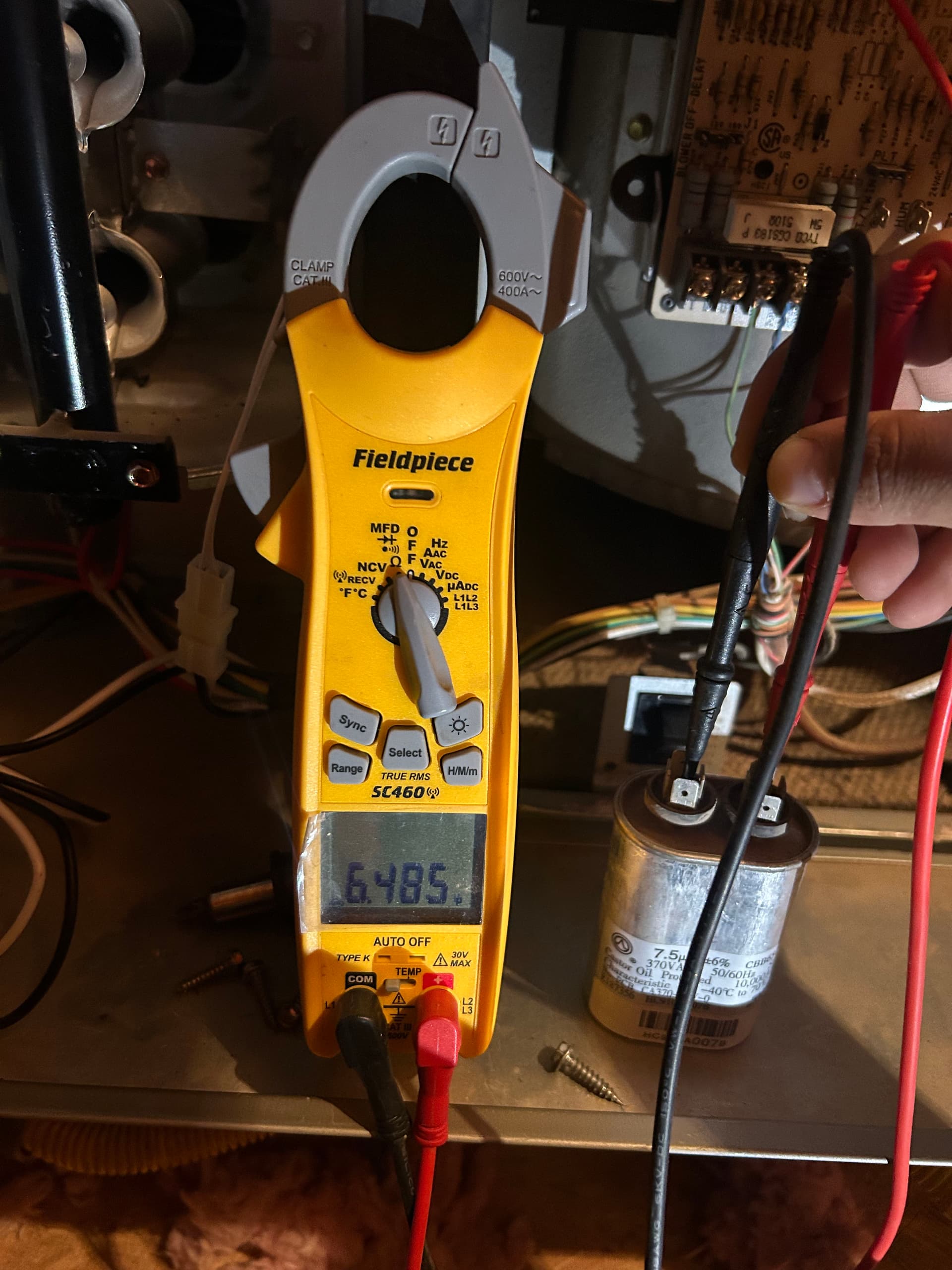
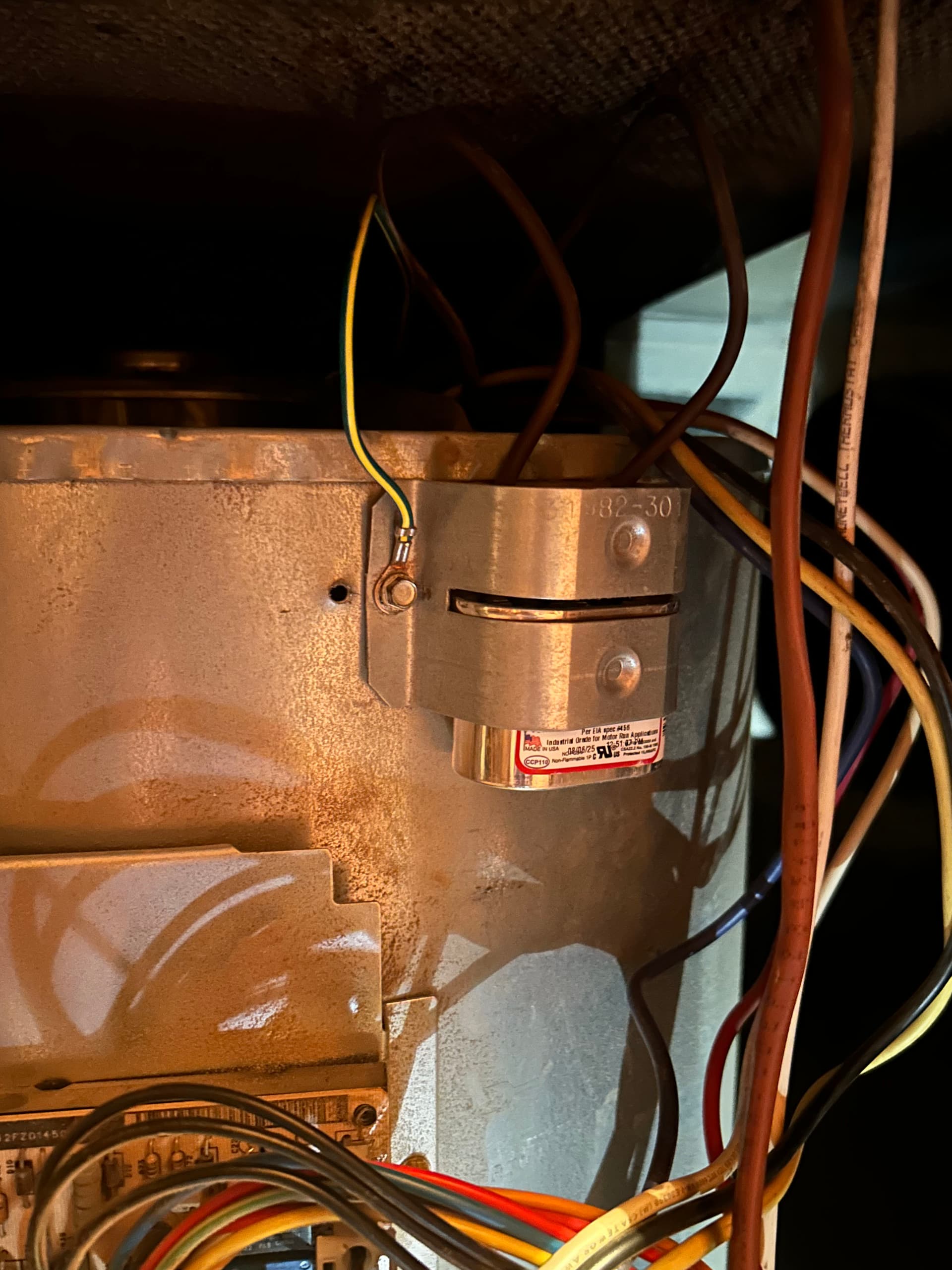
We were working in a tight attic space - not exactly comfortable conditions - but that doesn't change how we do the job. When we tested the run capacitor on this unit, it read 6.485 mF on our Fieldpiece SC460. The capacitor is rated at 7.5 mF. That gap might sound small, but it puts the reading outside the acceptable tolerance range. A capacitor in that condition is unreliable. It can cause the blower motor to struggle, overheat, and eventually fail - which turns a simple part replacement into a much more expensive repair.
We walked the homeowner through exactly what we found and why it mattered. No upselling, no vague warnings. Just the actual reading, the rated spec, and what happens if you leave it alone. They understood it right away and we replaced the capacitor on the spot.
This is what a real heating tune-up looks like. It's not just changing a filter and calling it done. We test the components that actually keep the system running - capacitors, contactors, motors, safeties - because that's where failures hide. Catching something like this during a routine inspection is the difference between a $30 part and a $500+ motor replacement.
If your system hasn't had a proper inspection in a while, this is the kind of thing that could be sitting in your unit right now without any obvious symptoms. A heating inspection done right means checking the numbers, not just eyeballing the equipment.